


EFutures CFO
  • Categories
    • Start Here: The Systems CFO Model
    • For PE and VC-Backed CFOs
    • For Founders Scaling from $10M to $100M
    • For Boards and Audit Committees
  • Latest Articles
    • Start Here: The Systems CFO Model
    • For PE and VC-Backed CFOs
    • For Founders Scaling from $10M to $100M
    • For Boards and Audit Committees
  • Master Classes
    • 26-Part Financial Architecture
    • Master Class: Cap Table
    • Master Class: Capital Allocation
    • Master Class: ERP Implementation
    • Federal Contracting Playbook
    • Master Class: FP&A
    • Master Class: International Trade
    • M&A Execution Program Masterclass
    • Nonprofit Playbook
    • PE and VC Masterclass
    • Pricing Strategy Masterclass
  • Blogs
  • About
  • Services
  • Snippets
  • Videos
  • Contact Us

EFutures CFO
  • Categories
    • Start Here: The Systems CFO Model
    • For PE and VC-Backed CFOs
    • For Founders Scaling from $10M to $100M
    • For Boards and Audit Committees
  • Latest Articles
    • Start Here: The Systems CFO Model
    • For PE and VC-Backed CFOs
    • For Founders Scaling from $10M to $100M
    • For Boards and Audit Committees
  • Master Classes
    • 26-Part Financial Architecture
    • Master Class: Cap Table
    • Master Class: Capital Allocation
    • Master Class: ERP Implementation
    • Federal Contracting Playbook
    • Master Class: FP&A
    • Master Class: International Trade
    • M&A Execution Program Masterclass
    • Nonprofit Playbook
    • PE and VC Masterclass
    • Pricing Strategy Masterclass
  • Blogs
  • About
  • Services
  • Snippets
  • Videos
  • Contact Us
EFutures CFO
Popular Topics
  • style
  • music
  • lifestyle
  • fashion
  • art
PopularView All

Aligning CEO Vision with Investor Expectations

In the world of venture capital, money is not just a resource. It is a directional signal. When capital comes into a company, it brings expectations about the market, the pace of growth, and the eventual path to liquidity. For the CEO of a venture-backed company, understanding these expectations is not optional. Every venture firm has a thesis, and that thesis shapes everything from hiring cadence to capital deployment. A wise CEO does not assume all capital is alike but works to understand the worldview behind it and adapts priorities accordingly. The CEO brings operational knowledge and customer insight. The investor brings market experience and return pressure. When these perspectives meet with mutual humility, the company steers with purpose. Alignment is not a one-time event. It must be refreshed constantly. The relationship between a CEO and their venture investors is foundational. Dollars are important but direction matters more.

byadmin
February 10, 2026

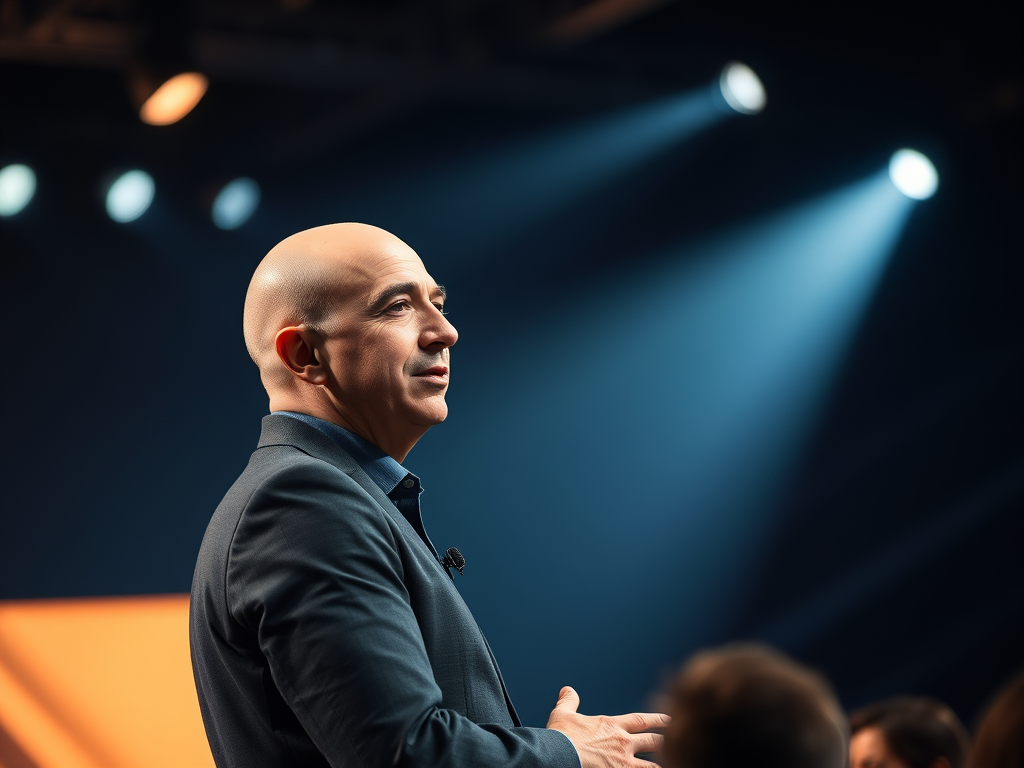
Bezos’s Decision Architecture: A CFO’s Blueprint for Strategic Clarity and Momentum

When Jeff Bezos founded Amazon in 1994, he created a decision-making architecture governing who decides, how fast, and with what information. These methods became embedded in Amazon: two-pizza teams limiting coordination overhead, one-way versus two-way door distinctions calibrating review depth to decision reversibility, Day 1 mindset maintaining organizational freshness, and disagree-and-commit protocols accelerating alignment after debate. For Chief Financial Officers, these ideas provide clarity about capital allocation, trust distribution, and agility deployment across the organization. This analysis demonstrates how CFOs can weave Bezos’s decision architecture into finance functions to elevate rigor and speed in capital allocation and risk management. The framework translates into organizing capital budgeting around cross-functional pods, classifying investments by reversibility, building rolling forecasts, establishing delegation authority based on complexity, and formalizing disagree-and-commit protocols. This redefines the CFO role from fiscal sentry to strategic conductor, enabling finance to deploy capital to innovation, manage risk-taking with discipline, and build organizational capacity.

byadmin
February 10, 2026

The Founder Dilemma: Balancing Control and Evolution

There comes a moment in the life of every startup when growth begins to strain its original architecture. What was once a tight circle of founders who operated by instinct becomes a larger organism demanding systems, scale, and structure. The shift is both exhilarating and painful. For the founder, it feels like standing on a shoreline where waves of evolution challenge role and identity. Some moments call for asserting leadership. Others demand surrender. Knowing when to push back and when to step back becomes the central emotional and structural test of the journey. The early days are defined by improvisation, with roles being fluid and decisions fast. But success introduces complexity. Product lines expand. Teams double, then triple. Informal systems break. The founder who thrived in ambiguity must now lead through clarity. This tension is not a failure but a sign of growth. However, if not addressed, it becomes corrosive. The skills required to start a company differ from those needed to scale it. Evolution starts with asking the right questions: What does the company need now? Where am I most effective? Where am I in the way?

byadmin
February 10, 2026

OKRs vs KPIs: Driving Purpose and Performance

The transition from key performance indicators to objectives and key results represents a fundamental shift from measuring what is easily quantified to pursuing what matters strategically. Drawing from three decades at the intersection of finance, strategy, and systems thinking, this analysis demonstrates how OKRs transform founder-led companies under private equity ownership by connecting daily execution to strategic ambition without draining entrepreneurial agility. Traditional KPI-driven cultures entrench focus on lagging indicators serving as scorecards of past performance rather than compass needles pointing toward future direction. OKRs add the essential “why” by binding outcomes to purpose, with objectives defining destinations while key results quantify progress. Successful implementation requires education distinguishing output from outcome, recalibrating incentive structures to introduce intentional alignment, establishing cadences treating uncertainty as signal rather than noise, and building transparency explaining why objectives matter. The framework matures when embedded into operational cores, when teams craft objectives supporting company directional arc, and when review processes function as Bayesian updates revising beliefs about what works. This evolution transforms accountability from residing in founder memory to becoming institutional capability, democratizing leadership while preserving entrepreneurial speed, creating conditions where private equity sponsors gain execution visibility without micromanagement, and building companies that shape performance rather than merely measure it.

byadmin
February 10, 2026

Category: INCORPORATING A COMPANY IN THE US

May 17, 2026

The 12-Month Integrated Roadmap

May 17, 2026

The Vendor and Advisor Stack:

May 17, 2026

PEOs, 401(k), Discrimination Testing,

May 17, 2026

International Tax Basics:

May 17, 2026

R&D; Tax Credit, Section 174

May 17, 2026

Securities Law Basics

May 17, 2026

Insurance Stack:

May 17, 2026

Governance, Corporate Hygiene

May 17, 2026

Employment Setup

May 17, 2026

State and Local Tax

The Latest
    • Corporate Financial Planning
    • For Founders Scaling from $10M to $100M
    How to Overcome Growth Stagnation in Businesses

    Growth stagnation represents one of the most challenging inflection points in a company’s lifecycle. Unlike dramatic market crashes or sudden competitive disruptions, growth stalls often emerge gradually through subtle shifts in market dynamics, operational friction, or strategic misalignment. Drawing from extensive experience advising leadership teams across financial services, technology, and healthcare sectors, this article examines the critical distinction between strategic and operational failures that underlie growth plateaus. The diagnostic process requires disciplined inquiry, emotional intelligence, and the courage to confront uncomfortable truths about both market fit and execution capabilities. Successful recovery demands not just identifying root causes but also sequencing interventions appropriately, whether that means rebuilding operational foundations before pursuing new strategic initiatives or pivoting core value propositions when market assumptions prove flawed. The companies that emerge stronger from growth stalls share common characteristics: they create space for honest assessment, they resist the impulse toward premature action, and they rebuild with deliberate intent rather than reactive urgency. This exploration offers practical frameworks for diagnosing growth stagnation and charting pathways toward sustainable, resilient expansion that positions organizations for long-term competitive advantage.

    January 28, 2026
    • Corporate Financial Planning
    • For Founders Scaling from $10M to $100M
    Why Your Startup Needs a 12-Month Operating Review

    If a startup’s journey can be likened to an expedition up Everest, then its operating model is the climbing gear: vital, adaptable, and often revised. In the early stages, founders rely on grit and flexibility. But as companies ascend and attempt to scale, they face a stark truth: yesterday’s systems are rarely fit for tomorrow’s challenges. Having scaled organizations from nine million to one hundred eighty million dollars in revenue and advised companies from pre-revenue startups through growth stages, I learned that your operating model must evolve consciously and structurally every twelve months if your company is to scale, thrive, and remain relevant. This is not speculative opinion. It is a necessity borne out by economic theory, pattern recognition, operational reality, and the statistical arc of business mortality. According to McKinsey research, only one in two hundred startups make it to one hundred million dollars in revenue, and even fewer become sustainably profitable. The cliff is not due to product failure alone. It is largely an operational failure to adapt at the right moment. This article explores why systematic operating model evolution is essential for startup success and how to implement a disciplined review cycle.

    January 27, 2026
    • Corporate Financial Planning
    • For Founders Scaling from $10M to $100M
    Control Is a Currency: Strategic CFO Thinking on Founder Dilution

    For many founders, the equity stake is sacred, symbolizing control, ambition, and identity. Yet as companies scale, ownership fragments and founders who once owned ninety percent may find themselves below twenty. CFOs positioned at the nexus of capital and governance must engage founders with a sharper truth: control is not merely a function of equity but a currency deployed strategically across negotiation, communication, and organizational design. This requires distinguishing between economic rights and control rights, which often diverge. A founder can own fifteen percent and still wield decisive control through dual-class shares or board composition. The CFO must model dilution scenarios robustly, showing not just percentages but control outcomes including board voting and liquidation preferences. This analytical rigor must be coupled with psychological insight, framing dilution not as erosion but as strategic reinvestment. When understood as currency, control can be traded or diluted if the exchange yields strategic return, and the CFO’s job is helping founders manage that currency with intention rather than instinct.

    January 22, 2026
    • Corporate Financial Planning
    • Start Here: The Systems CFO Model
    Emergency Financial Action Plan for CFOs: The First 90 Days of a Financial Reset

    When the numbers stop making sense, the first instinct must be to make sense of them again quickly. Whether triggered by demand collapse, liquidity shortfall, margin compression, or debt covenant breach, the early days of a financial reset require a CFO to operate less like a strategist and more like a field general. Time compresses, noise multiplies, and decisions carry outsized consequences. These first 90 days are not merely about restoring order but regaining control. This is not the time for vision decks or long-range strategy retreats but for disciplined execution, ruthless prioritization, and transparency across all financial lines. Companies do not turn around with optimism; they turn around with arithmetic. The emergency action plan requires establishing financial truth through a 13-week rolling cash forecast and rapid working capital diagnostic, implementing stabilization and containment through spending freezes and stakeholder negotiations, rebuilding the cost base and capital structure through forensic P&L examination and capital stack realignment, and creating strategic coherence through recovery briefs and embedded financial operating rhythms. Beyond the 90-day mark, the goal shifts from staying alive to scaling wisely through unit economics focus, scalable systems infrastructure, and intelligent capital access strategy. The CFO becomes stabilizer, risk manager, capital allocator, and truth-teller in this compressed window, executing with discipline, transparency, and courage to create not just survival but the architecture of enduring advantage.

    January 20, 2026
EFutures CFO
EFutures is a world-class software product engineering company delivering AI-driven digital solutions to clients globally. We enable scalable growth through innovative technology.
Copyright © 2026 All Rights Reserved EFuturesCFO